
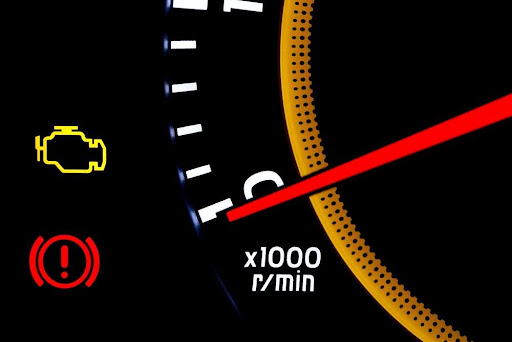
You’re driving to work when you glance down at your dashboard and notice a new glow. The check engine light has suddenly turned on. Immediately, questions begin running through your mind. Is it safe to keep driving? Is something seriously wrong with my vehicle? Will this turn into an expensive repair?
The truth is that a check engine light can indicate anything from a simple maintenance issue to a more significant engine or emissions problem. While your vehicle may still seem to run normally, ignoring the warning can allow a relatively minor issue to develop into a much more costly repair over time. That’s why it’s important to have the problem professionally diagnosed as soon as possible.
What Does the Check Engine Light Actually Mean?
The check engine light is part of your vehicle’s onboard diagnostic system (OBD-II). This system constantly monitors the performance of dozens of engine, emissions, fuel, ignition, and electrical components through a network of sensors and computer modules.
When the system detects a problem that falls outside normal operating parameters, it stores a diagnostic trouble code (DTC) and illuminates the check engine light on your dashboard.
Depending on the issue, you may notice additional symptoms such as:
- Reduced fuel economy
- Rough idling
- Engine hesitation
- Poor acceleration
- Hard starting
- Increased exhaust emissions
- Strange engine noises
In some cases, however, the vehicle may seem to drive perfectly normally despite the warning light. That’s why it’s never a good idea to assume the problem is minor without having it inspected.
The Most Common Reasons the Check Engine Light Comes On
While hundreds of different diagnostic codes can trigger the warning light, several problems account for the majority of check engine light visits.
Loose or Damaged Gas Cap
Your gas cap helps maintain pressure within the fuel system and prevents fuel vapors from escaping. If the cap is loose, cracked, or missing, the onboard computer may detect a leak in the evaporative emissions (EVAP) system and turn on the check engine light.
Fortunately, tightening or replacing the gas cap often resolves the issue.
Failing Oxygen Sensor
Oxygen (O2) sensors measure the amount of oxygen in your vehicle’s exhaust gases and help the engine computer adjust the air-fuel mixture for optimal performance.
When an O2 sensor begins to fail, your engine may burn more fuel than necessary, reducing fuel economy and increasing emissions.
Worn Spark Plugs
Spark plugs ignite the air-fuel mixture inside the engine cylinders. As they wear over time, they may begin misfiring, causing rough engine performance, poor acceleration, and reduced fuel efficiency.
Replacing spark plugs according to your manufacturer’s maintenance schedule helps prevent many ignition-related problems.
Faulty Ignition Coils
Ignition coils provide the electrical voltage needed for spark plugs to fire properly. When a coil begins failing, one or more cylinders may misfire, causing engine vibration, sluggish acceleration, and poor overall performance.
Catalytic Converter Problems
The catalytic converter helps reduce harmful emissions before exhaust gases leave the vehicle.
If the converter becomes clogged or damaged, it can reduce engine performance, increase fuel consumption, and trigger the check engine light. Because catalytic converters are expensive components, addressing engine issues early can often help prevent premature failure.
Mass Airflow Sensor Failure
The mass airflow (MAF) sensor measures the amount of air entering the engine. If this sensor provides inaccurate readings, the engine may receive too much or too little fuel, leading to poor fuel economy, hesitation, rough idling, and difficult starts.
EVAP System Leaks
The evaporative emissions system captures gasoline vapors and prevents them from escaping into the atmosphere. Leaks anywhere within the EVAP system, including in hoses, valves, seals, or the charcoal canister, can trigger the check engine light even though the vehicle continues driving normally.
Fuel System Issues
Problems within the fuel system may also activate the warning light. Potential causes include:
- Dirty fuel injectors
- Weak fuel pumps
- Fuel pressure problems
- Restricted fuel filters
These issues may reduce engine performance and eventually leave the vehicle unable to start if left unresolved.
Malfunctioning Engine Sensors
Beyond the main sensors, components like the camshaft position sensor, crankshaft position sensor, or engine coolant temperature sensor can glitch or wear out over time, causing the ECU to lose track of vital engine timings.
What Should You Do When the Check Engine Light Turns On?
Seeing the check engine light doesn’t necessarily mean you need to panic, but it should never be ignored.
Take a moment to assess how the vehicle is behaving and look closely at the light itself:
- Check for a Flashing Light: A blinking or flashing check engine light indicates a severe, active engine misfire. This means unburnt fuel is dumping into the exhaust system, which can overheat and permanently destroy your catalytic converter within minutes. If the light is flashing, pull over safely as soon as possible, turn off the engine, and have the vehicle towed.
- Notice if the Light Is Solid: If the light is steady and solid, the issue is not an immediate emergency, but it still requires prompt attention. Check your dashboard gauges to ensure your engine isn’t overheating and that you have normal oil pressure. Then, schedule a check engine light inspection ASAP.
- Tighten Your Gas Cap: If you recently filled up your tank, pull over to a safe spot, remove the gas cap, and screw it back on until it clicks firmly. It may take a few trips for the car’s computer to reset the light if this was the cause.
- Reduce Your Load: If the light comes on while you are towing a trailer or carrying heavy cargo, reduce your speed and lighten the load if possible to alleviate strain on the engine until you can get a diagnostic check.
Why Professional Diagnostics Matter
A common misconception among drivers is that a handheld code reader from a local auto parts store will tell them exactly what is wrong with their car. In reality, these consumer-grade code readers only provide a generic code number. They tell you where the computer detected a symptom, but they do not tell you why the failure occurred.
Advanced diagnostic equipment operated by certified technicians goes far deeper than basic code scanning. Professional diagnostics matter because they allow a qualified auto repair technician to:
- Retrieve Manufacturer-Specific Codes: Professionals can access deep-level modules within the vehicle’s computer architecture that cheap scanners cannot read.
- Analyze Live Freeze-Frame Data: Technicians can view exact snapshots of what the engine was doing (RPM, temperature, vehicle speed) at the precise millisecond the fault code was triggered.
- Perform Pinpoint and Electrical Testing: Auto mechanics utilize specialized multimeters, smoke machines (for EVAP leaks), and pressure gauges to test the various components of the car.
- Identify the Exact Cause of the Problem: Technicians can easily differentiate between a bad sensor and a broken wire, vacuum leak, or mechanical failure causing the sensor to read incorrectly.
Ultimately, taking your car in for a professional inspection can save you money by preventing the unnecessary replacement of perfectly good parts based on guesswork.
Trust Rob’s Automotive & Collision Center for Expert Engine Diagnostics
When your check engine light comes on, you deserve answers you can trust. At Rob’s Automotive & Collision Center, our experienced technicians use advanced diagnostic equipment to quickly identify the source of your warning light and recommend dependable, long-lasting repairs. Whether the problem is a loose gas cap, a failing sensor, an ignition issue, or a more complex engine concern, our team will get to the bottom of it and provide the right repair.
If your check engine light has turned on, contact Rob’s Automotive & Collision Center today to schedule a professional diagnostic appointment. We’re proud to help drivers throughout Bucks County, Berks County, Chester County, and Central New Jersey keep their vehicles running safely and reliably.