
That Squeak Isn’t Just Annoying — It’s a Warning
You’re driving along when suddenly your car makes a high-pitched squeak or a grinding noise every time you hit the brakes. It’s more than just irritating. For most drivers, the first question is: “Why are my brakes squeaking?” The truth is, brake noise is your vehicle’s way of telling you that something needs attention.
Brakes are one of the most important safety systems on your vehicle, and ignoring early warning signs can lead to dangerous situations on the road. Let’s break down the most common causes of squeaky and grinding brakes, when the noise is harmless, and when it’s time to see a mechanic.
Why Are My Brakes Squeaking?
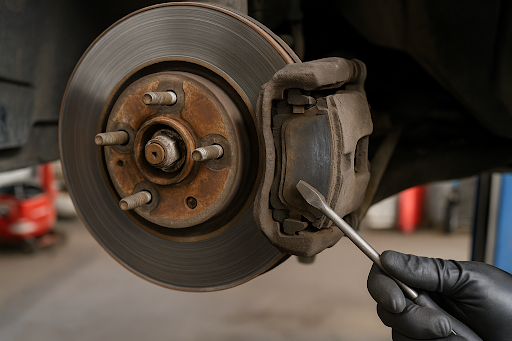
Brake squeaks are usually caused by friction, heat, or wear within the braking system. The sound may vary depending on the condition of your brake pads, rotors, or surrounding parts. Common causes include:
- Worn Brake Pads – Most modern brake pads are designed with wear indicators that make a squealing noise when they’ve reached their limit. It’s your car’s way of saying, “replace me.”
- Moisture or Rain – A thin layer of rust or water on the rotor can cause temporary squeaks, especially first thing in the morning or after driving in snow or rain.
- Dust and Debris – Dirt, sand, or other particles can get trapped between the pad and rotor, creating squeaky or grinding noises.
- Lack of Lubricant – Dry contact points, such as the caliper slides, can create squeals when pressure is applied to the brake system.
- Brake Pad Material – Certain materials, such as ceramic or semi-metallic pads, are more prone to squeaking under light braking.
If you find yourself on Google searching things like, “why are my brakes squeaky?” or “why are my brakes screeching?”, the safest option is to have them inspected by a professional auto mechanic.
Why Are My New Brakes Squeaking?
It’s not uncommon for drivers to ask, “why are my new brakes squeaking?” after a recent brake job. New pads often need a short break-in period to seat properly against the rotors. During this time, light squeaks may occur.
However, persistent noise could mean:
- Improper installation
- Low-quality pad materials
- Lack of proper lubrication during installation
If you’ve just had your brakes replaced and the squeaking doesn’t go away after a week of normal driving, it’s worth scheduling a follow-up inspection.
Why Are My Brakes Grinding?
While squeaks can sometimes be harmless, grinding is always serious. If you’re hearing grinding noises when you brake, here’s what it could mean:
- Metal-on-Metal Contact – When pads wear completely, the backing plate grinds against the rotor. This causes damage that requires both pad and rotor replacement.
- Foreign Objects – Rocks or debris lodged between the rotor and caliper can cause a grinding sound.
- Worn Drum Brakes – For vehicles with rear drum brakes, worn shoes or contact points can lead to grinding.
Driving with grinding brakes isn’t just noisy — it’s dangerous. Braking distance increases, parts wear faster, and the chance of an accident rises significantly.
How Weather and Road Conditions Contribute
Brake noises can also change with conditions outside your vehicle:
- Humidity and Moisture – Moisture causes temporary surface rust on rotors, which often leads to squeaks until it wears off.
- Snow and Ice – Winter weather can pack moisture and debris around the pads, causing squealing.
- Heat and Friction – Heavy braking on long hills or while towing can overheat pads, creating glaze and vibration.
Even if the noise is weather-related, consistent squeaking or grinding should still be inspected.
The Role of Brake Fluid and Maintenance
Sometimes the question “why are the brakes on my car squeaking?” isn’t about pads or rotors at all. Low or contaminated brake fluid can create uneven pressure in the system, leading to noise and vibration. Routine brake system maintenance, including fluid flushes, helps prevent these issues.
Signs It’s Time for a Brake Inspection
Don’t wait until your steering wheel shakes or your stopping distance increases. Have your brakes checked if you notice:
- A squeaking or screeching noise every time you brake
- Grinding sounds that worsen under pressure
- Vibration or pulsing in the brake pedal
- A soft or spongy brake lever or pedal
- Visible wear on brake pads or rotors
At Rob’s, our ASE-certified technicians provide thorough inspections, transparent recommendations, and reliable repairs. Schedule service at our automotive repair center to address brake issues before they compromise your safety.
Common Vehicles We Service
We diagnose and repair brake issues for all makes and models, including Ford, Chevy, Toyota, Honda, Hyundai, Nissan, GMC, Dodge, Subaru, BMW, Audi, Volkswagen, Chrysler, Lexus, Jeep, and Porsche. From commuter sedans to SUVs, trucks, and even electric vehicles, our team has the experience and equipment to work on all types of braking systems.
Brake Repairs at Rob’s Auto
When you bring your vehicle to Rob’s, you’ll get more than just a quick fix. Our services include:
- Pad and rotor replacement
- Caliper inspection and replacement
- Brake fluid flushes
- Drum brake service
- Emergency brake and parking brake adjustments
- Performance brake upgrades
Like everything Rob’s does, brake repairs are backed by our commitment to quality and customer satisfaction.
Locations Across PA and NJ
Brake problems can happen anywhere, which is why Rob’s offers multiple service centers across the region.
Wherever you’re located in the Greater Philadelphia, Bucks County, Berks County, or Chester County regions, Rob’s has a shop nearby to help. We also have shops dedicated to heavy-duty truck repairs and trailer repairs.
Frequently Asked Questions
Why are my brakes squeaking on my car?
Brake squeaks are usually caused by worn pads, moisture on rotors, or debris stuck in the system.
Why are my brakes squeaky even after replacement?
New brakes may squeak during break-in, but persistent squeals could mean poor installation or pad material issues.
Why are my brakes grinding?
Grinding often indicates worn-out pads making metal-on-metal contact with rotors, which requires immediate service.
Can weather cause squeaky brakes?
Yes. Humidity, rain, and snow can create temporary surface rust or moisture, leading to squeaks that go away after driving.
Don’t Wait on Squeaky or Grinding Brakes
If you’ve been wondering, “Why are my brakes squeaking?” or noticed grinding when you press the pedal, don’t ignore it. Brake problems only get worse the longer they’re left unchecked.
Visit Rob’s Automotive & Collision Center today for expert inspections, reliable repairs, and peace of mind on the road. With multiple locations and decades of experience, Rob’s is your trusted partner for safe and dependable stopping power.