
Do you hear a squeal or screech when you apply the brakes to pull into traffic or slow down at a stoplight? That sharp, high-pitched noise is something many drivers experience at some point, and it often leads to the same question: Is this just annoying, or is something wrong with my brakes?
The truth is, not all brake noises mean immediate danger. Sometimes, squeaky brakes are caused by harmless conditions. However, because your braking system plays such a critical role in your safety, brake noise should never be ignored.
Below, we’ll walk through the most common reasons brakes start squeaking and when noises signal it’s time to get an inspection.
How Your Braking System Works
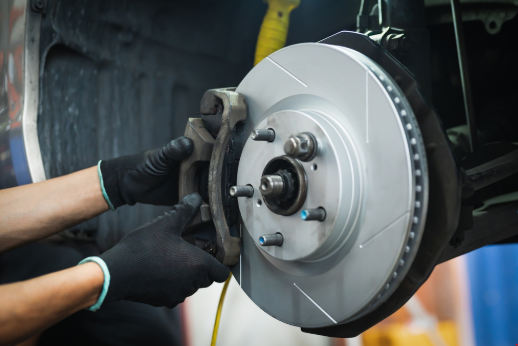
When you press the brake pedal, hydraulic fluid triggers a caliper to squeeze two brake pads against a spinning metal disc called a rotor. This friction is what stops your wheels from turning, but it also means that brake components naturally wear down over time. Brake pads, in particular, are built to sacrifice themselves gradually so more expensive parts, like rotors and calipers, stay protected.
Because friction is involved, some level of sound can be normal under certain conditions. The key is knowing which noises are harmless and which are warning signs.
Common Reasons Brakes Start Squeaking
Squeaky brakes can often be the result of:
- Moisture and Surface Rust: Have you noticed your brakes squeak only first thing in the morning? Overnight moisture can cause a thin layer of surface rust to form on the rotors. As you drive the first block or two, the pads scrape this layer off, causing a temporary squeal.
- Cold Weather: Brakes may squeak more when temperatures drop, as materials contract and friction characteristics change.
- Brake Dust: Over time, the friction material on your pads wears down into a fine dust. This dust can get trapped between the pad and the rotor, causing a persistent chirp.
- Glazed Pads and Rotors: If brakes are pushed too hard (like constant heavy braking down a steep hill), they can glaze. This means the material has become overheated and hardened into a smooth, glass-like surface that slips and squeaks.
- Cheap Brake Pads: Some low-cost brake pads contain high concentrations of large metal flakes, which can be naturally noisier than high-quality ceramic or semi-metallic options.
- Normal Wear: As brake pads get thinner, they may begin to make noise, even before they’re completely worn out.
In these cases, the squeak may be intermittent and not accompanied by changes in braking performance. Still, ongoing noise is worth having checked by an auto repair shop.
When Brake Noise Signals a Safety Issue
Many brake pads include wear indicators — small metal tabs that intentionally create a high-pitched squeal when pads are nearing the end of their life. This sound is your vehicle’s way of saying it’s time for service.
More concerning sounds include grinding, growling, or a loud screech that happens every time you brake. These noises can indicate that the brake pads are fully worn and metal is grinding against metal. You may also notice reduced stopping power, vibrations in the steering wheel, or a brake pedal that feels soft or unresponsive. When brake noise is paired with any of these symptoms, it should be addressed immediately. Don’t hesitate to pull off to the side of the road and call for a towing service.
The Risks of Driving With Worn or Damaged Brakes
Driving with worn or damaged brakes puts more than just your comfort at risk; it can compromise your safety and lead to costly repairs. As brake pads wear down completely, they can damage the rotors, turning a simple brake job into a much more expensive repair.
Beyond cost, compromised brakes increase stopping distance, especially during sudden stops or wet road conditions. This can reduce your ability to react quickly in traffic, raising the risk of accidents. Over time, neglected brake issues can also strain other components of the braking system, leading to uneven wear or brake failure.
In short, ignoring squeaky brakes doesn’t make the problem go away; it often makes it worse.
Schedule a Brake Inspection Today
If your brakes are making noise and you’re unsure what it means, the safest next step is a professional inspection. At Rob’s Automotive & Collision Center, our certified technicians take the time to thoroughly evaluate your braking system, from pads and rotors to fluid and hardware. We then deliver quality workmanship so you can drive away with confidence.
Whether your brakes need a simple adjustment or a full replacement, our experienced team is here to help keep you and your passengers safe on the road. Contact us today to schedule a brake inspection you can trust. We proudly offer these services in Morgantown and Bristol, PA.