
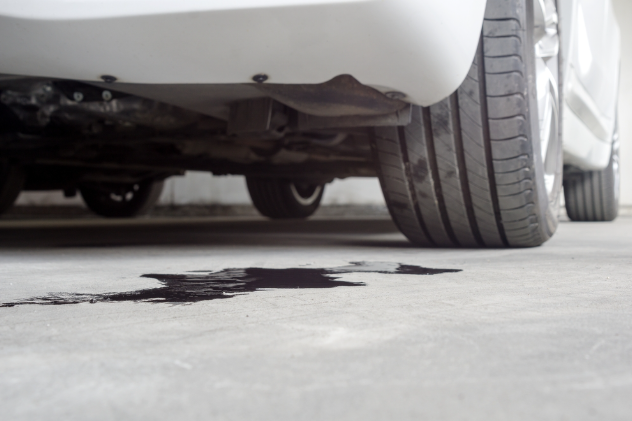
Walking out to your driveway or parking spot and seeing a dark puddle under your car can create a sinking feeling in your gut. At first glance, it’s hard to tell whether it’s a small drip that can wait or a serious issue that could lead to major engine damage. Unfortunately, oil leaks fall into the category of problems you should never ignore. Even a slow leak often signals an underlying issue that needs prompt attention.
At Rob’s Automotive & Collision Center, our technicians regularly diagnose oil leaks and know how to fix them before they turn into costly repairs or engine failure. And we’re here today to explain the most common reasons for engine oil leaks and how you should handle them.
What Engine Oil Does and Why It’s Critical
Engine oil plays a vital role in keeping your vehicle running properly. Its primary job is to lubricate the many moving parts inside your engine, reducing friction and preventing excessive wear. Without proper lubrication, metal components can grind against each other, generating heat and accelerating damage.
In addition to lubrication, engine oil helps regulate temperature by carrying heat away from critical components. It also cleans the engine by trapping dirt, debris, and microscopic metal particles, keeping them from building up inside the system.
When oil leaks out of your engine, these essential functions are compromised. Even if the leak seems minor, low oil levels can quickly lead to overheating, reduced performance, and long-term engine damage. That’s why any sign of oil under your car should be addressed promptly with professional automotive repairs.
Common Causes of Oil Leaks Under Your Car
Oil leaks can originate from several different points within the engine. In fact, because the engine is a pressurized system, even a tiny gap in a seal can result in a steady drip. Some of the most common culprits we see at Rob’s Automotive include:
Degraded Engine Gaskets
Gaskets are the seals that sit between two metal parts of the engine. Over time, the constant heat cycles and pressure cause these seals, such as the valve cover gasket or the oil pan gasket, to become brittle and crack.
A Damaged Oil Filter
Sometimes, the fix is simple. If the oil filter is loose, misaligned, or has a broken seal (O-ring), oil will bypass the filter and drip directly onto the ground. This is why professional oil changes are so important; we ensure the filter is seated and torqued correctly.
A Faulty Oil Pressure Sensor or Switch
These electronic components are screwed into the engine block. If the housing of the sensor fails, oil can actually leak through the electrical connector or the threads.
Worn Crankshaft or Camshaft Seals
These are dynamic seals that prevent oil from escaping where a rotating shaft exits the engine block. When these fail, the leak is often more substantial and can even contaminate your timing belt, leading to further mechanical issues.
A Damaged Oil Pan
Road debris, speed bumps, or potholes can dent or crack the oil pan, allowing oil to seep or pour out. Additionally, a stripped drain plug can result in a slow, persistent leak if it is worn down from oil changes or not properly replaced.
What Happens If You Ignore an Oil Leak
Ignoring an oil leak can have serious consequences for your vehicle. As oil levels drop, the engine loses its ability to properly lubricate and cool itself. This can lead to increased friction, overheating, and accelerated wear on internal components.
Additionally, running an engine with low oil can cause bearings, pistons, and camshafts to suffer irreversible damage. In extreme cases, the engine may seize entirely, resulting in a repair or replacement that costs thousands of dollars.
Beyond mechanical damage, oil leaks can also pose safety and environmental risks. Oil dripping onto hot engine parts, for example, can create smoke or even a fire hazard, while oil on the ground can contaminate soil and create slippery surfaces.
Receive Oil Leak Diagnostics You Can Trust
Because oil can travel along engine components before dripping to the ground, pinpointing the exact source of a leak requires experience and precision. At Rob’s Automotive & Collision Center, our certified technicians use thorough inspection techniques and advanced diagnostic tools to locate the root cause of the problem. Specifically, we take the time to assess your engine, identify worn seals, damaged components, or installation issues, and recommend the right repair to protect your vehicle’s performance and longevity. Our goal is to stop the leak, restore proper oil levels, and help prevent future issues that could compromise your engine.
If you’ve noticed oil under your car or suspect a leak, don’t wait for the problem to get worse. Contact Rob’s today to schedule a professional oil leak diagnostic. We offer automotive repair and service for Bucks County, Berks County, and Chester County at our Bristol shop and Morgantown facility.